
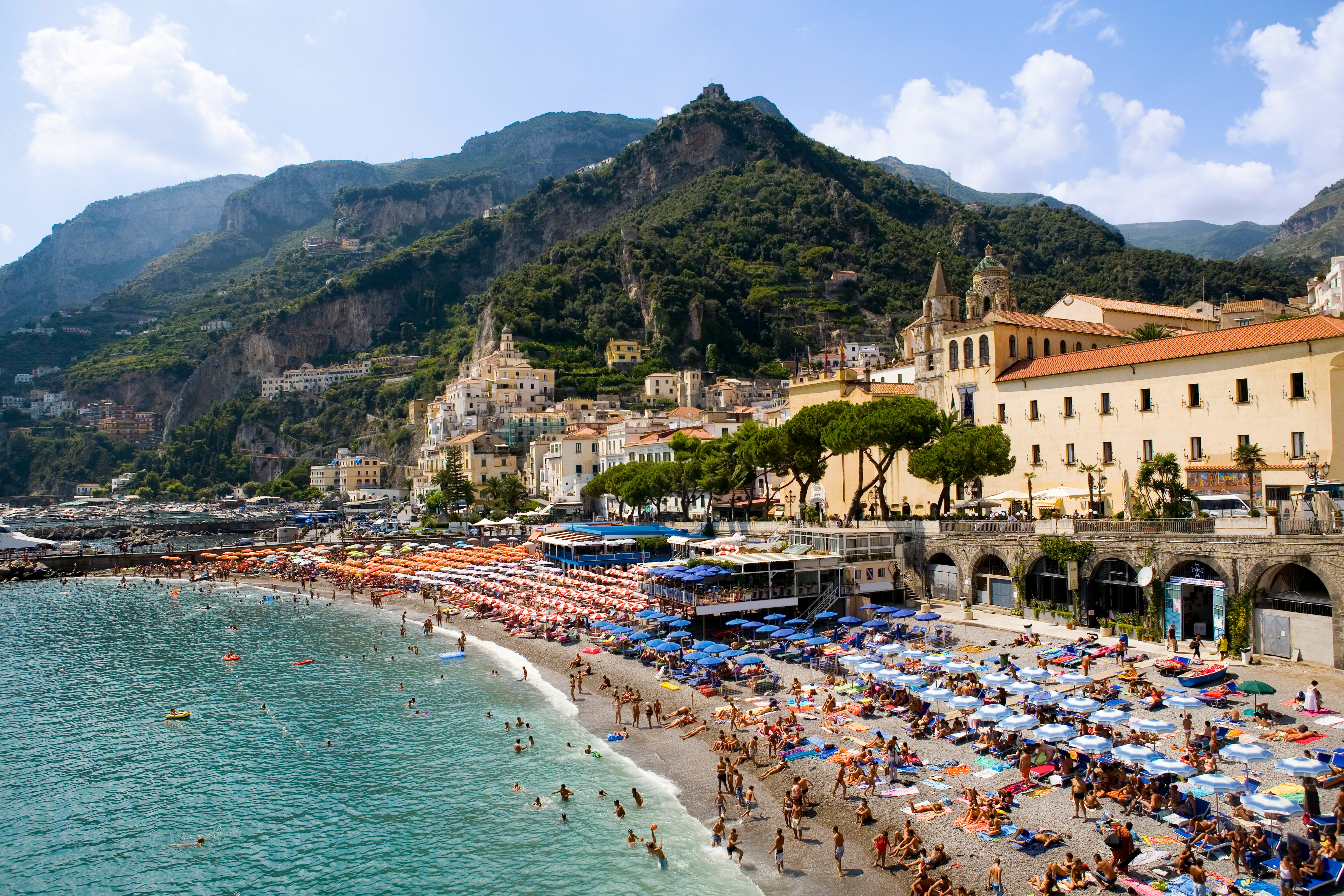
There is a version of the Amalfi Coast that most travelers never see. It exists below the hairpin turns of the SS163, past the ceramic shops and the lemon groves heavy with fruit, beyond the crowded marina at Positano where day-trippers jostle for selfies against pastel-painted walls. This other Amalfi is quieter, wilder, and infinitely more beautiful. It is a coastline of hidden calas -- small, rocky inlets carved by millennia of waves -- where the water shifts from deep navy to an almost impossible shade of emerald, and the only sounds are the rhythmic lap of the Tyrrhenian Sea against ancient stone and the distant hum of a wooden gozzo rounding the headland.
We have spent years exploring this stretch of southern Italy, returning season after season to chart the coves that guidebooks overlook and that even many locals consider too difficult to reach on foot. What follows is not a typical travel guide. It is a carefully curated collection of the places we send our most discerning clients -- the travelers who have already done Positano and Ravello, who have already sipped limoncello on a terrace overlooking the Mediterranean, and who now want something deeper. Something that feels earned. These are the hidden calas of the Amalfi Coast, and reaching them is half the pleasure.
Beyond Positano's Postcard
Positano is spectacular, and we would never suggest skipping it entirely. The cascade of terracotta and pink buildings tumbling toward the shore is one of Europe's most recognizable vistas for good reason. But the beach at Spiaggia Grande, particularly during July and August, has become a study in overcrowding. Rows of loungers stretch so tightly together that finding a patch of sand for your towel requires the negotiating skills of a diplomat. The restaurants along the waterfront, while charming, charge premium prices for a view that is increasingly shared with hundreds of others.
The secret that seasoned Amalfi travelers understand is that the most memorable swimming on this coast happens away from the main beaches. The limestone cliffs that define the Costiera Amalfitana are riddled with small inlets, sea caves, and pebbled coves that can only be accessed by boat -- or, in a few daring cases, by scrambling down unmarked trails through terraced lemon orchards. These hidden calas offer the kind of swimming experience that the Amalfi Coast became famous for in the first place: crystalline water, dramatic rock formations, and a sense of splendid isolation that feels almost anachronistic in modern Italy.
Cala di Furore
If there is one cala that defines the hidden Amalfi, it is Cala di Furore. Technically a fjord rather than a simple cove, this narrow inlet sits at the base of a deep gorge where the Schiato torrent meets the sea. A stone bridge arches high above the water, and every summer the town hosts a cliff-diving competition from that bridge -- a spectacle that draws crowds for a single weekend before the cala returns to its usual tranquility.
Outside of that event, Cala di Furore is remarkably peaceful. The small pebble beach, barely fifty meters wide, is flanked by towering rock walls that cast long shadows across the water in the morning hours. Arriving by boat, you enter through a narrow opening that feels almost secretive, as though the sea itself is parting to reveal a private chamber. The water here is startlingly clear -- you can see every stone on the bottom even at five or six meters of depth -- and it carries that particular shade of green-blue that only seems to exist where fresh mountain water mingles with the Mediterranean.
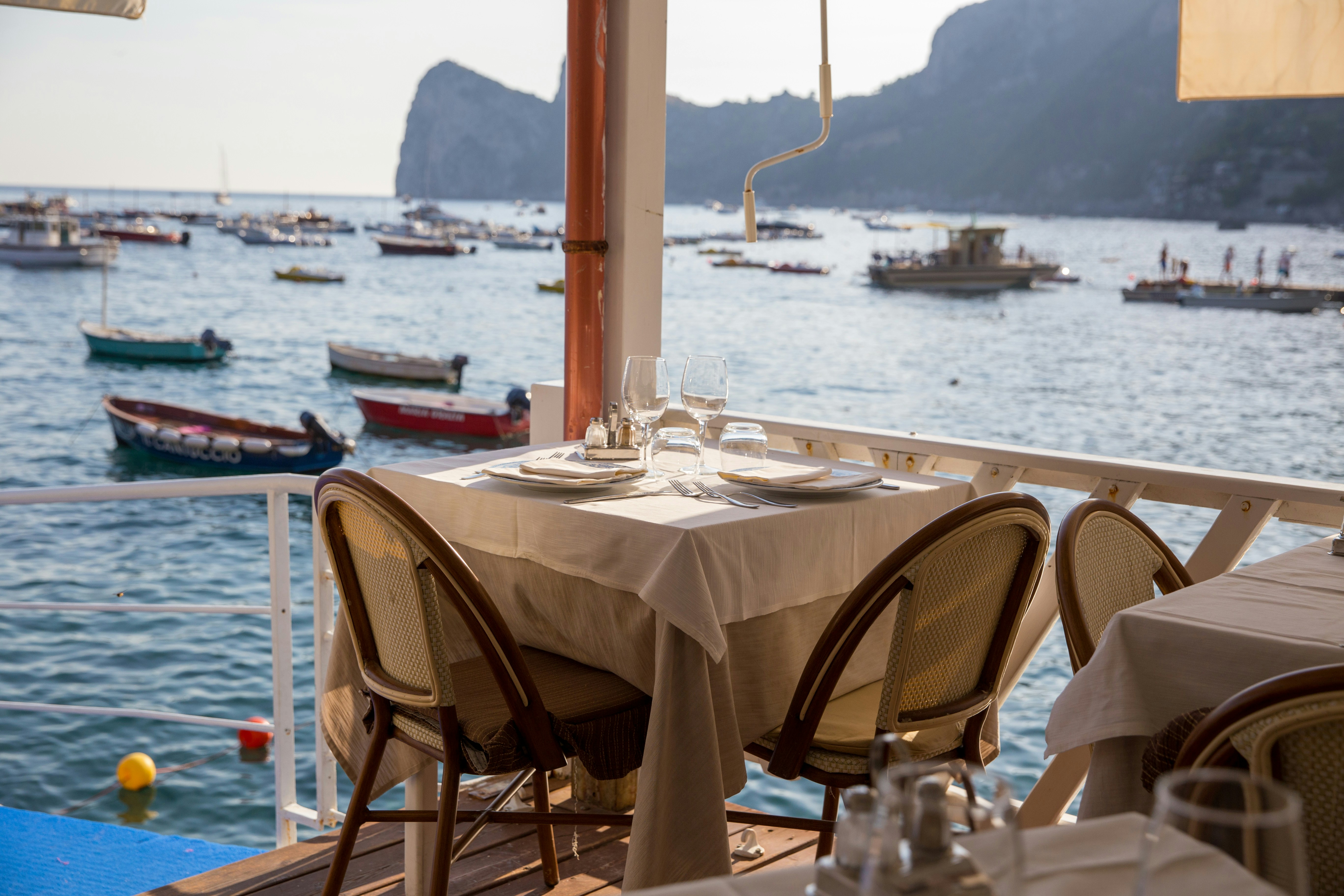
We recommend visiting Cala di Furore in the early morning, ideally arriving by private boat from Amalfi town. The light between seven and nine in the morning is extraordinary -- it pours down the gorge walls in long golden shafts, turning the water into liquid jade. Bring snorkeling gear. The rocky walls beneath the surface are home to sea urchins, small octopus, and schools of damselfish that seem entirely unbothered by human visitors. There is a small beach bar that opens in summer, but we prefer to bring provisions aboard the boat and linger in the water until the day-trippers begin to trickle down the steep steps from the road above.
Marina di Praia
Tucked between Furore and Praiano, Marina di Praia is a tiny fishing village that has managed to retain its working character despite sitting on one of the world's most touristed coastlines. The beach is small -- a crescent of coarse sand and smooth pebbles sheltered by two rocky promontories -- but what it lacks in size it compensates for with atmosphere. Fishing boats in faded blues and greens are pulled up onto the shore, their nets draped over the rocks to dry. A handful of restaurants occupy converted boathouses at the water's edge, their tables set so close to the sea that spray occasionally mists your aperitivo.
The real treasure at Marina di Praia, however, is what lies just around the headland to the east. A short swim or a two-minute boat ride brings you to a series of small caves and overhangs where the cliffs have been sculpted by centuries of wave action into shapes that resemble gothic arches. The swimming here is superb -- deep water right up to the rock face, with natural ledges for resting and small grottos that glow an ethereal blue when the sun is at the right angle. It is the kind of place where you lose track of time entirely, floating on your back and watching the clouds drift across a narrow strip of sky between the cliff tops.
"The Amalfi Coast rewards those who slow down. Its greatest beauty is not found on the main road, but in the quiet spaces between the cliffs, where the sea keeps its oldest secrets." -- A Local Fisherman, Praiano
Conca dei Marini and the Emerald Grotto
Conca dei Marini is one of the smallest municipalities on the Amalfi Coast, home to fewer than 800 residents, and its diminutive size is part of its charm. The village clings to the cliff face in a series of terraces connected by ancient stone steps, and its main attraction -- the Grotta dello Smeraldo, or Emerald Grotto -- is one of the coast's most extraordinary natural wonders. Discovered by a local fisherman in 1932, the grotto is a sea cave where sunlight enters through an underwater opening and is filtered through the water, filling the entire chamber with an otherworldly emerald glow.
Most visitors arrive at the Emerald Grotto on large tour boats that queue at the entrance, and the experience can feel rushed -- you are ferried through in a small rowboat, given perhaps ten minutes inside, and then shuttled back out. We arrange for our clients to visit by private boat at off-peak hours, often in the late afternoon when the tour groups have departed and the light takes on a warmer, more golden quality. The difference is remarkable. Without the pressure of a schedule, you can truly absorb the scale of the cave, watch how the light shifts and pulses with the movement of the water, and understand why the grotto has been compared to everything from a cathedral to the inside of an emerald itself.
Just east of the grotto, a series of small calas dot the shoreline below Conca dei Marini. These are perhaps the least visited swimming spots on the entire Amalfi Coast, largely because there is no easy way to reach them except by sea. The largest of these coves has a narrow strip of white pebbles backed by a sheer cliff face covered in wild capers and fig trees that somehow find purchase in the rock. Swimming here in the golden hour, with the cliffs glowing amber above you and the water still warm from a day of southern Italian sun, is one of the most sublime experiences the Mediterranean has to offer.
Ember Travel Tip
Private boat charters are the single best investment you can make on the Amalfi Coast. A traditional gozzo with a knowledgeable local captain opens up an entirely different coastline -- one that road-bound travelers simply cannot access. We work with a small network of family-run charter operators whose families have fished these waters for generations. They know every hidden cove, every sea cave, and every sheltered inlet where you can anchor for a swim in perfect solitude. Our team handles all the logistics, from selecting the right vessel to provisioning a lunch of local mozzarella, prosciutto, and chilled Falanghina wine. You simply step aboard and point toward the horizon.
When to Visit
Timing is everything on the Amalfi Coast, and the difference between visiting in peak season and shoulder season is the difference between a crowded spectacle and a private paradise. July and August bring the largest crowds, the highest prices, and temperatures that can make the steep coastal walks punishing. The water is warmest during these months, certainly, but the trade-off in terms of tranquility is significant.
We consistently recommend late May through mid-June, and again from mid-September through mid-October. During these windows, the weather is reliably warm and sunny, the sea temperature is comfortable for swimming -- typically between twenty-one and twenty-four degrees Celsius -- and the coastal towns operate at a fraction of their summer capacity. Restaurant reservations that are impossible to secure in August become pleasantly easy. Hotel rates drop considerably. And most importantly for the cala-seeking traveler, the hidden inlets and coves that we have described are genuinely deserted.
There is also something to be said for the quality of light during the shoulder months. The lower sun angle creates longer shadows and richer colors, particularly in the late afternoon when the limestone cliffs glow a deep honey gold. Photographers know this instinctively, and some of the most iconic images of the Amalfi Coast were captured in September and October, when the summer haze lifts and the views across to Capri and the Li Galli islands become startlingly sharp.
Planning an Amalfi Coast trip that goes beyond the guidebook requires local knowledge, trusted relationships, and the kind of attention to detail that turns a good holiday into an unforgettable one. That is precisely what we do at Ember Travel Co. Whether it is securing a private boat with the right captain, booking a cliffside suite with a view that stops your heart, or arranging a cooking lesson in a grandmother's kitchen in Ravello, we handle every detail so that you can focus on what matters most -- being present in one of the most beautiful places on earth.