
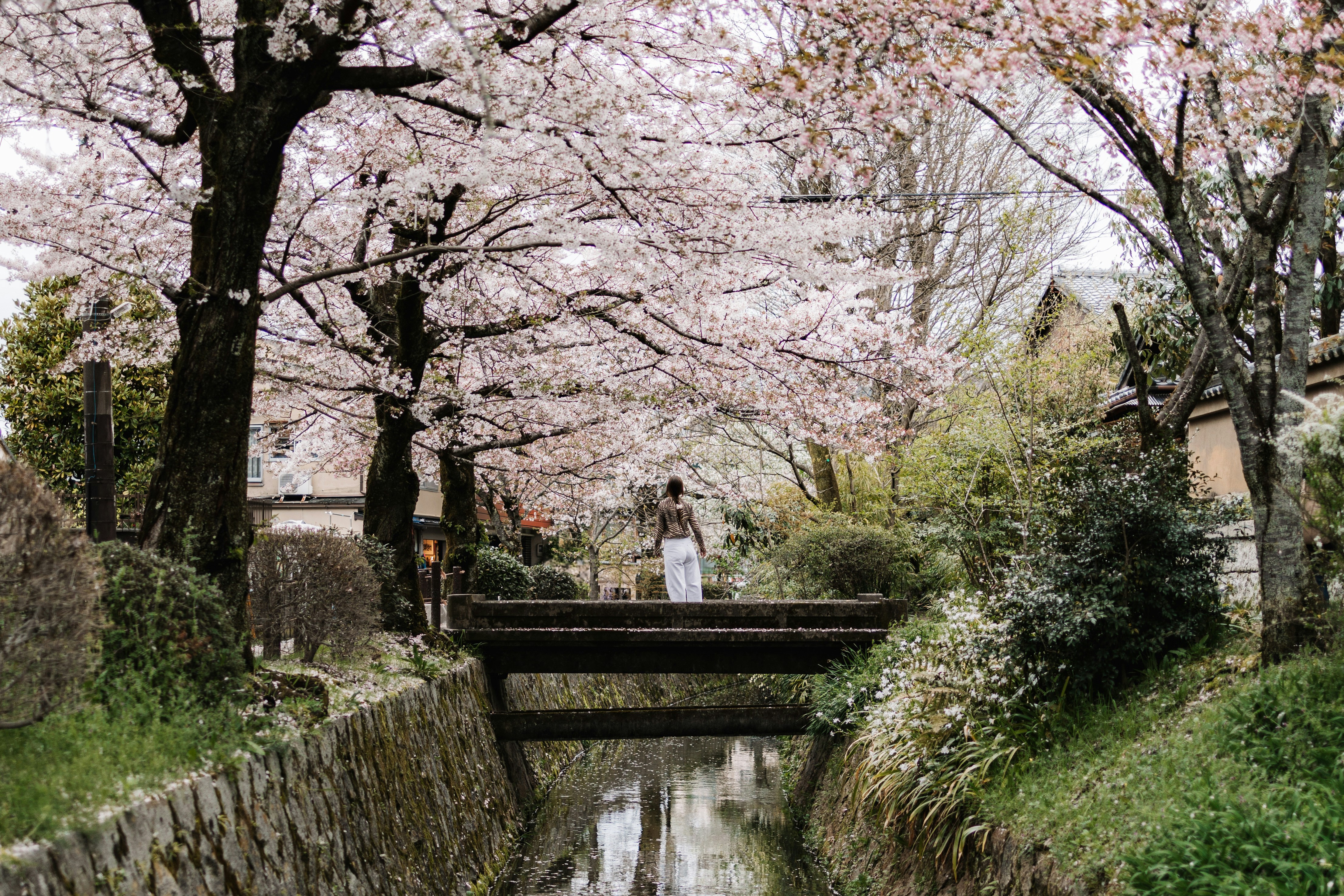
Kyoto does not reveal itself to those in a hurry. This is a city that has spent more than a thousand years perfecting the art of subtlety -- a place where beauty is found not in the grand gesture but in the single leaf turning on a moss-covered stone, in the precise angle at which light enters a tea room, in the sound of water falling over bamboo into a garden pool that has been tended by the same family for three hundred years. To visit Kyoto on a packed itinerary of temple-hopping and bullet-train connections is to miss the point entirely. Kyoto asks you to slow down. And when you do, it gives you everything.
We have been designing Kyoto itineraries for years, and the single most important piece of advice we offer every client is this: do less. See fewer temples. Visit fewer gardens. Eat at fewer restaurants. But give yourself fully to the ones you choose. This is the philosophy of slow travel as it applies to one of the world's most culturally dense cities, and it is, we believe, the only way to truly understand what makes Kyoto extraordinary. What follows is our guide to experiencing Kyoto slowly, through the lens of wabi-sabi -- the Japanese aesthetic centered on the acceptance of transience and imperfection -- and the rituals that define daily life in this ancient capital.
What Wabi-Sabi Means for the Traveler
Wabi-sabi is one of those concepts that resists easy translation. At its core, it is an aesthetic sensibility rooted in Zen Buddhism that finds beauty in impermanence, incompleteness, and imperfection. A cracked teacup repaired with gold. The weathered grain of an unpainted wooden gate. Moss growing over a stone lantern until the lantern itself seems to be returning to the earth. In the West, we tend to equate luxury with polish and perfection -- marble lobbies, thread counts, sharp edges. Wabi-sabi proposes something different: that the most profound beauty exists in things that bear the marks of time and use.
For the traveler, embracing wabi-sabi means shifting your attention from the spectacular to the subtle. It means noticing the way a garden path is deliberately irregular, forcing you to watch your step and therefore to be present. It means appreciating a ryokan room not for its size but for the quality of its silence, the scent of its tatami mats, the way the shoji screens diffuse the afternoon light into something soft and golden. It means understanding that the crack in the teacup is not a flaw but a story -- and that your journey, too, does not need to be perfect to be beautiful.
This philosophy shapes every Kyoto itinerary we design at Ember Travel Co. We do not overload your days. We leave space for wandering, for getting gently lost in the backstreets of Higashiyama, for sitting on a wooden veranda and watching rain fall on a gravel garden. These unplanned moments, we have found, are invariably the ones our clients remember most vividly years later. Not the famous temple. Not the Michelin-starred meal. But the unexpected encounter with stillness in a city that has been cultivating stillness for over twelve centuries.
Morning in Arashiyama Before the Crowds
The bamboo grove at Arashiyama is one of Kyoto's most photographed locations, and by mid-morning on any given day it is packed with visitors shuffling along the narrow path between the towering culms, holding their phones overhead to capture the green cathedral above. It is still beautiful -- there is no density of tourists that can diminish the sheer impact of standing among bamboo that stretches twenty meters into the sky -- but the experience of the grove as a place of contemplation is largely lost once the crowds arrive.
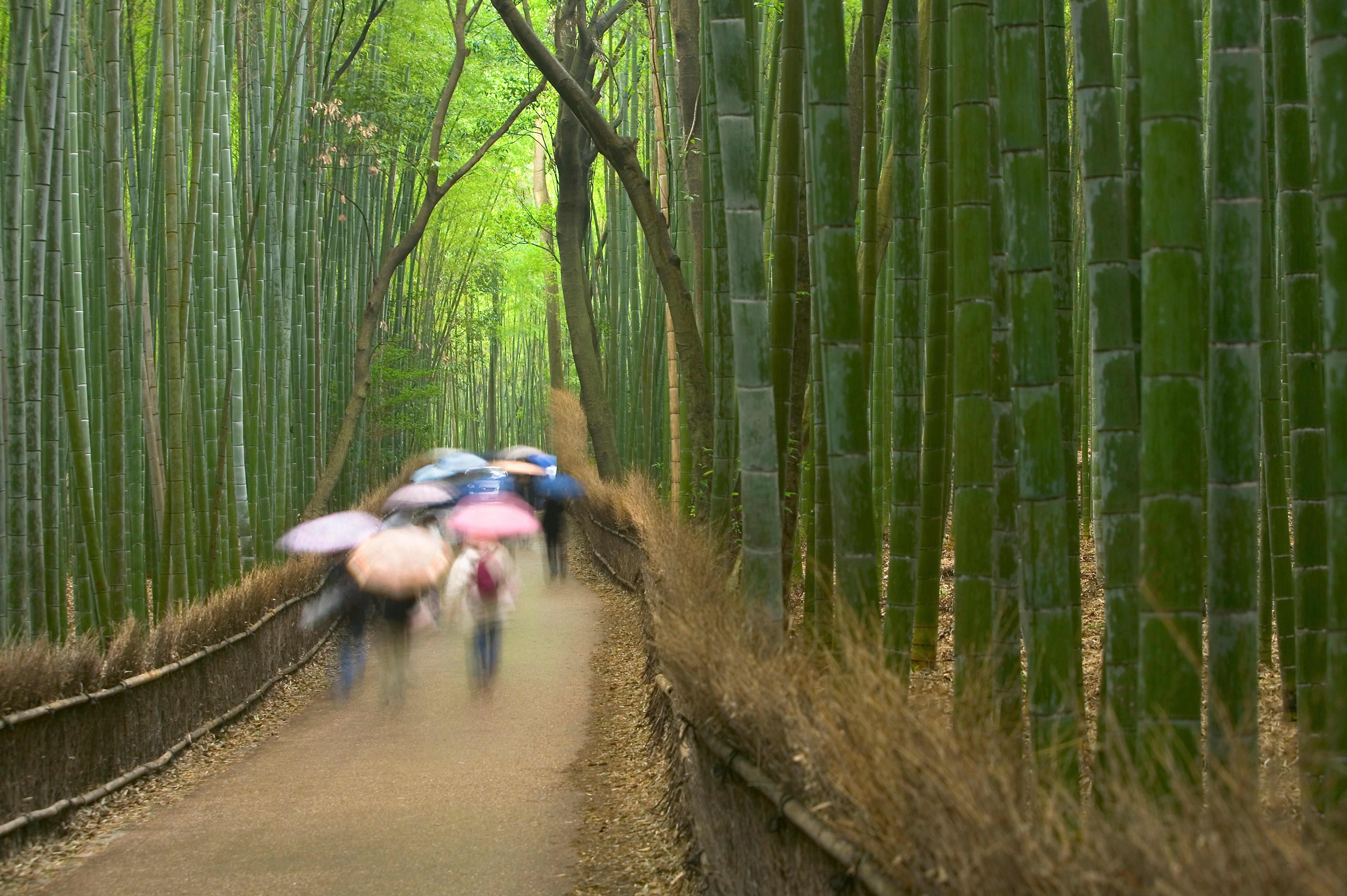
The solution is simple but requires commitment: arrive early. We arrange for our clients to be at the entrance to the grove by six-thirty in the morning, before the tour buses from Osaka have departed and before the rickshaw drivers have begun their rounds. At that hour, the grove is almost empty. The light is soft and blue-green, filtered through the dense canopy. The bamboo creaks and sways in the morning breeze, producing a sound that the Japanese government has officially designated as one of the country's most important soundscapes. You can walk slowly, stop when you wish, and feel the particular quality of silence that exists in the spaces between the bamboo -- a silence that is not empty but full, alive with the subtle rustling of ten thousand leaves.
From the grove, we recommend walking south along the riverbank to Tenryu-ji, one of Kyoto's great Zen temples, which opens its gardens at eight-thirty. The garden here was designed by the legendary monk Muso Soseki in the fourteenth century and is considered one of the finest examples of the borrowed scenery technique, in which distant mountains are incorporated into the garden's composition as though they were part of the design itself. Standing at the edge of the pond garden, looking past the manicured pines to the wild, forested slopes of Arashiyama beyond, the boundary between human creation and natural landscape dissolves entirely. This is wabi-sabi made visible: the garden does not attempt to control nature but to collaborate with it.
"In Kyoto, I sat in a tea house for three hours. I thought I was wasting time. It turned out to be the most productive thing I did all year." -- An Ember Travel Co. Client
The Machiya Stay
Where you sleep in Kyoto matters as much as what you see during the day. The large international hotels in the station district offer every modern amenity, but they could be anywhere in the world. For the slow traveler, we recommend a machiya -- a traditional Kyoto townhouse -- as your base for at least part of your stay. These narrow wooden houses, some dating back two hundred years or more, were once the homes and workshops of merchants and artisans. Many have been thoughtfully restored and converted into private accommodations that offer an immersive experience of traditional Japanese domestic life.
A typical machiya is arranged around a central garden courtyard, or tsuboniwa, that brings light and air into the long, narrow structure. The rooms are floored with tatami mats, the walls are sliding shoji screens, and the furnishings are minimal -- a low table, floor cushions, a futon that is laid out each evening by your host. The kitchen often includes a traditional kamado cooking stove alongside modern appliances, and the bath is a deep soaking tub, or ofuro, made from fragrant hinoki cypress wood. Stepping into a machiya after a day of temple visits feels like stepping backward in time while losing none of the comforts that matter.
We work with a carefully selected portfolio of machiya properties in Kyoto's most atmospheric neighborhoods. Our favorites are in the Nishijin textile district, where the sound of looms still echoes from workshop doorways, and in the quieter backstreets of Higashiyama, within walking distance of Kiyomizu-dera and the Philosopher's Path. Each property has been vetted for authenticity, comfort, and that intangible quality of atmosphere -- the feeling, when you slide open the front door and step into the genkan entrance hall, that you have been invited into something private and precious.
Tea Temples and Time
No slow travel experience in Kyoto is complete without participating in a tea ceremony, or chanoyu. But we do not mean the abbreviated tourist versions offered at many temples and cultural centers, where groups of fifteen or twenty visitors sit in rows and are handed a bowl of matcha with a brief explanation in English. We mean a private ceremony conducted by a tea master in a purpose-built tea house, lasting anywhere from one to three hours, in which every movement, every object, and every moment of silence carries meaning.
The tea ceremony is, in many ways, the purest expression of wabi-sabi in Japanese culture. The tea house is deliberately simple -- a small room, often no larger than four and a half tatami mats, with a tokonoma alcove displaying a single scroll and perhaps a single flower arrangement. The entrance is a low doorway, called a nijiriguchi, through which even the most powerful guest must bow to enter, leaving rank and ego at the threshold. Inside, the world contracts to the essentials: water, fire, tea, and the quiet attention of the host and guest to each other and to the present moment.
We arrange private ceremonies with tea masters who are willing to take the time to explain the significance of what is happening -- the seasonal selection of the tea bowl, the choice of hanging scroll, the way the charcoal is arranged in the hearth. These are not performances but genuine acts of hospitality, and the experience of receiving tea in this way is profoundly moving. Many of our clients describe it as one of the most memorable experiences of their travels -- not because anything dramatic happened, but precisely because nothing did. In the stillness of the tea room, with the sound of water heating in the iron kettle and the scent of matcha rising from the bowl, time itself seems to pause. And in that pause, something shifts.
Ember Travel Tip
When we design slow itineraries for Kyoto, we build in what we call "white space" -- blocks of unscheduled time that are just as intentional as the planned activities. A free afternoon in a machiya with nothing to do but read, nap, or wander your neighborhood on foot can be transformative. We also stagger your temple visits across multiple days rather than clustering them, and we pair each cultural experience with a contrasting moment of leisure: a morning at Ryoan-ji's rock garden followed by an afternoon soaking in a private onsen, for instance. The result is an itinerary that breathes, one that honors Kyoto's own rhythm of contemplation and celebration.
Kyoto has survived wars, fires, and the relentless pace of modernization. It endures because it has always understood something fundamental about the relationship between beauty and time -- that the two are not opposed but deeply intertwined. The moss on the temple stones is beautiful because it has taken decades to grow. The tea master's movements are graceful because they have been practiced for a lifetime. The garden is perfect because it has been tended, day after day, year after year, with a patience that borders on devotion.
To travel slowly through Kyoto is to participate in this understanding. It is to recognize that you, too, are a temporary visitor in a place that has seen millions come and go, and that the most respectful thing you can do -- the most rewarding thing you can do -- is to pay attention. Not to rush. Not to check boxes. But to sit, and look, and listen, and allow this extraordinary city to work its quiet magic on you, in its own time, at its own pace.
At Ember Travel Co., we consider Kyoto one of our signature destinations. Our team has deep relationships with machiya owners, tea masters, private guides, and the kind of small family-run restaurants that do not appear in guidebooks but serve the best tofu you will ever taste. We handle every detail of your journey -- from business-class flights to private transfers, from securing reservations at the most sought-after kaiseki restaurants to arranging a dawn visit to Fushimi Inari before the gates are crowded. You arrive in Kyoto with nothing to worry about and everything to discover.