
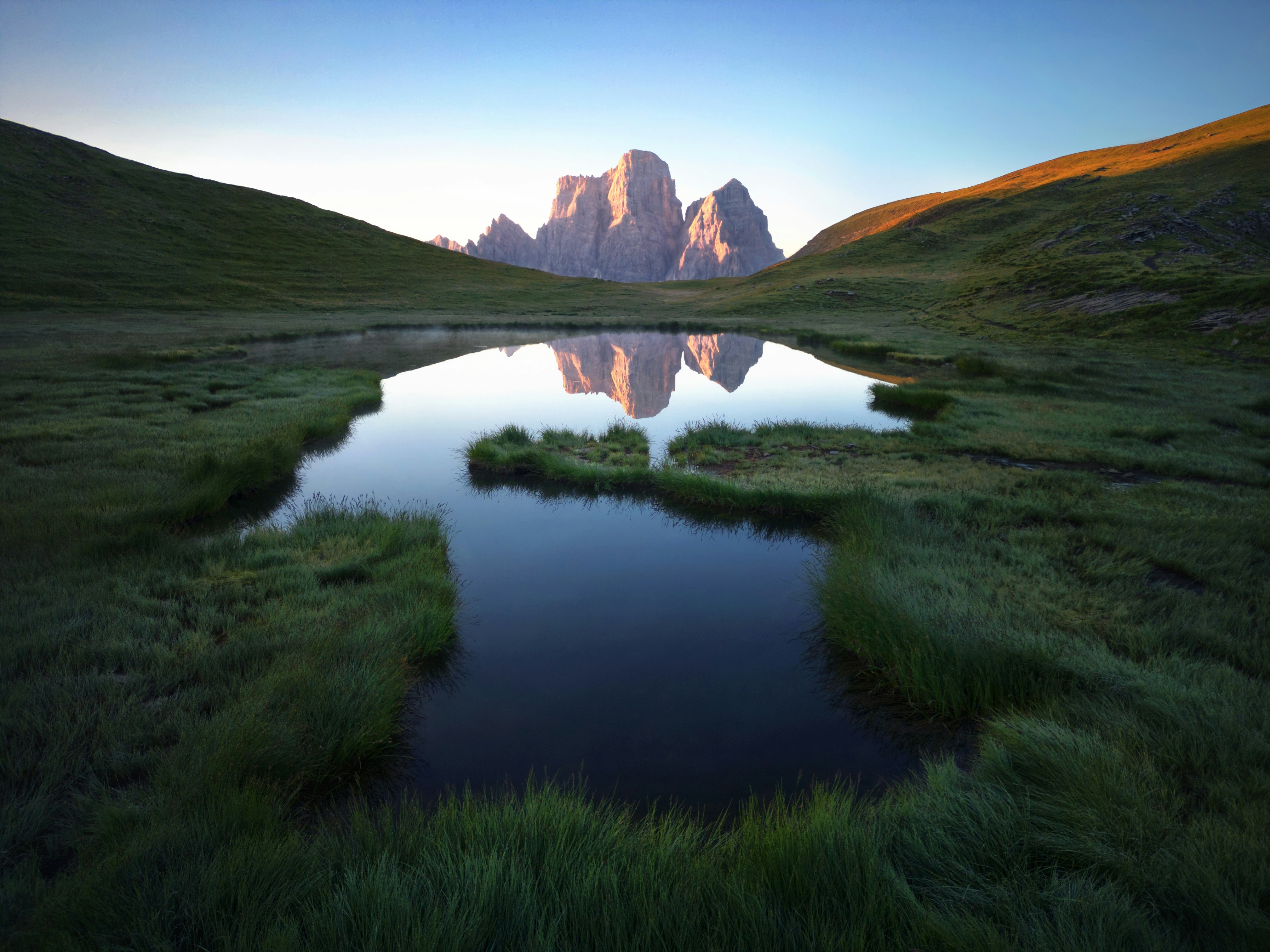
There is a stretch of the southern hemisphere where the Andes begin to dissolve into the sea, where glaciers calve into turquoise lakes with a sound like distant thunder, and where the wind carries a kind of ancient authority that makes every other landscape you have ever loved feel slightly decorative. This is Patagonia, and it will change the way you think about travel. Not because it is trending on social media or because a celebrity chef opened a restaurant in Puerto Natales, but because it remains one of the few places on Earth where nature is so overwhelming, so indifferent to human ambition, that simply standing in it feels like an achievement.
We have sent dozens of clients to Patagonia over the years, and the feedback follows a remarkably consistent pattern. First comes the silence. Even travelers who have visited remote corners of Iceland or the Australian Outback are startled by the particular quality of quiet here. It is not an absence of sound so much as a replacement of everything familiar with wind, water, and the occasional cry of an Andean condor tracing lazy circles overhead. Then comes the scale. Photographs cannot prepare you for the way Torres del Paine rises out of the steppe, how Perito Moreno Glacier fills your entire field of vision, or how the emptiness of the Argentine steppe makes you feel both small and strangely liberated.
Torres del Paine by Lodge
The traditional way to experience Torres del Paine National Park is on foot, carrying a heavy pack along the famous W Trek or the full Circuit. And for seasoned backpackers with strong knees and a tolerance for shared dormitories, that remains a wonderful option. But a quieter revolution has taken place in Patagonian hospitality over the past decade, and it has made the park accessible to a far wider range of travelers without sacrificing an ounce of wildness.
Lodges like Explora Patagonia, Tierra Patagonia, and Awasi Patagonia have pioneered a model that pairs full-day guided excursions with genuine comfort at the end of the trail. You wake to views of the Paine massif, eat breakfast prepared by chefs who understand that a day of hiking at altitude demands real fuel, and then set off with a guide who knows every moraine, every hidden lagoon, every spot where a puma was sighted last week. When you return in the late afternoon, there is a hot tub, a glass of Chilean Carmenere, and a bed that does not require inflating.
This is not soft adventure. These lodges position themselves deep inside or on the immediate border of the park, and the hikes they offer range from moderate valley walks to full-day ascents that will test anyone's fitness. The difference is recovery. Instead of crawling into a damp sleeping bag on a wooden platform shared with twenty strangers, you return to a private room with a view that most five-star hotels in the world cannot match. The experience is deeper, not shallower, because you are rested enough each morning to actually absorb what you are seeing.
Perito Moreno and the Sound of Ice
On the Argentine side, the town of El Calafate serves as the gateway to Los Glaciares National Park and its crown jewel, the Perito Moreno Glacier. Unlike most of the world's glaciers, Perito Moreno is not retreating. It advances steadily, pushing forward until enormous columns of ice break away from its face and crash into Lago Argentino with a violence that is both terrifying and mesmerizing. You can stand on the walkways opposite the glacier for hours, waiting for the next rupture, and it never gets old. The sound arrives a full second after the visual, a deep, percussive boom that rolls across the water and settles somewhere in your chest.
Most visitors experience Perito Moreno from the walkways, and that alone is extraordinary. But we always recommend the boat excursion that brings you within a few hundred meters of the glacier's face. From water level, the scale becomes almost incomprehensible. The ice wall rises sixty meters above the surface, and another one hundred twenty meters extend below. Its color shifts from white to a blue so deep it seems impossible that frozen water could produce it. For clients who want to go further, ice trekking excursions allow you to strap on crampons and walk on the glacier itself, navigating crevasses and meltwater streams with experienced guides.
"The glacier does not care about your schedule. It calves when it is ready. Learning to wait for it is the first lesson Patagonia teaches you." — A Local Guide, El Calafate
Estancia Life on the Steppe
Between the dramatic peaks and glaciers lies the steppe, a vast expanse of grassland that most travelers see only through a car window on the way to somewhere else. That is a mistake. The estancias, or ranches, that dot this landscape offer one of Patagonia's most authentic and least crowded experiences. These are working sheep and cattle ranches, many of them established by European immigrants in the late nineteenth century, that have opened their doors to guests without turning themselves into theme parks.
At an estancia like Nibepo Aike or Estancia Cristina, you ride horses across terrain that stretches to the horizon in every direction. You help gather sheep if the timing is right. You eat lamb that was raised on the property, cooked slowly over an open fire in the traditional asado style, and served with chimichurri and a Malbec from Mendoza. After dinner, the sky is so clear and so free of light pollution that the Milky Way looks like a physical structure you could almost reach up and touch. The Southern Cross hangs low and bright, and occasionally a meteor streaks across the darkness with casual brilliance.
What makes estancia stays particularly valuable is the human connection. The families who run these properties carry generations of stories about life at the edge of the habitable world. They know the land with an intimacy that no guidebook can replicate, and they share it with a warmth that feels genuinely Patagonian, understated and real. A two-night estancia stay, sandwiched between time in Torres del Paine and the glaciers, adds a dimension to a Patagonia trip that most itineraries miss entirely.
The Season Window
Patagonia's travel season is narrow, and understanding it is essential to planning a trip that actually works. The region sits at roughly the same latitude south as London sits north, but the comparison ends there. Weather in Patagonia is driven by the collision of Pacific and Atlantic air masses over the Andes, and the result is a level of unpredictability that keeps even locals guessing. You can experience four seasons in a single afternoon, and the wind, always the wind, is a constant companion.
The prime season runs from November through March, which is late spring through early autumn in the southern hemisphere. December and January offer the longest days, with sunlight stretching past ten in the evening, but they also bring the heaviest crowds and the highest prices. We find that November and March are the sweet spots. November brings wildflowers to the steppe and fewer hikers on the trails, though some high passes may still have snow. March offers autumn colors, particularly in the lenga beech forests that surround the lakes, and a sense of quiet that the midsummer months lack.
October and April sit at the fringes and carry more risk. Some lodges close in these months, and weather can swing from spectacular to brutal within hours. But for travelers willing to accept uncertainty, the rewards can be extraordinary. We had a client visit in early October last year who saw the Torres completely free of clouds for three consecutive days, something that midsummer visitors often wait an entire week to witness.
The best lodges in Patagonia book out six to twelve months in advance for peak season. Explora, Awasi, and Tierra Patagonia all have limited room counts by design, and once they fill, there is no overflow option. If you are considering a trip between December and February, we recommend beginning the planning process at least nine months ahead. For November and March shoulder season trips, six months is usually sufficient, but earlier is always better. We maintain direct relationships with these properties and can often secure availability and preferred room categories that are not visible on public booking platforms.
Patagonia is not a destination you visit casually. The flights are long, the distances between highlights are significant, and the logistics of moving between Chile and Argentina require careful choreography. Internal flights connect Santiago to Punta Arenas and Buenos Aires to El Calafate, but schedules are limited and subject to weather delays. Ground transfers between the two countries can take a full day, though the drive itself, crossing the border at a lonely checkpoint surrounded by nothing but steppe and sky, is part of the experience.
This is exactly the kind of trip where having someone plan the details makes the difference between a good vacation and a transformative one. The sequencing matters. The lodge selection matters. The balance between guided activity and free time matters. And the contingency plans for weather disruptions, which will happen, matter most of all. We have built Patagonia itineraries that flow seamlessly from Torres del Paine to the glaciers to the steppe, with every transfer, every guide, and every backup plan in place before our clients ever board a plane.